
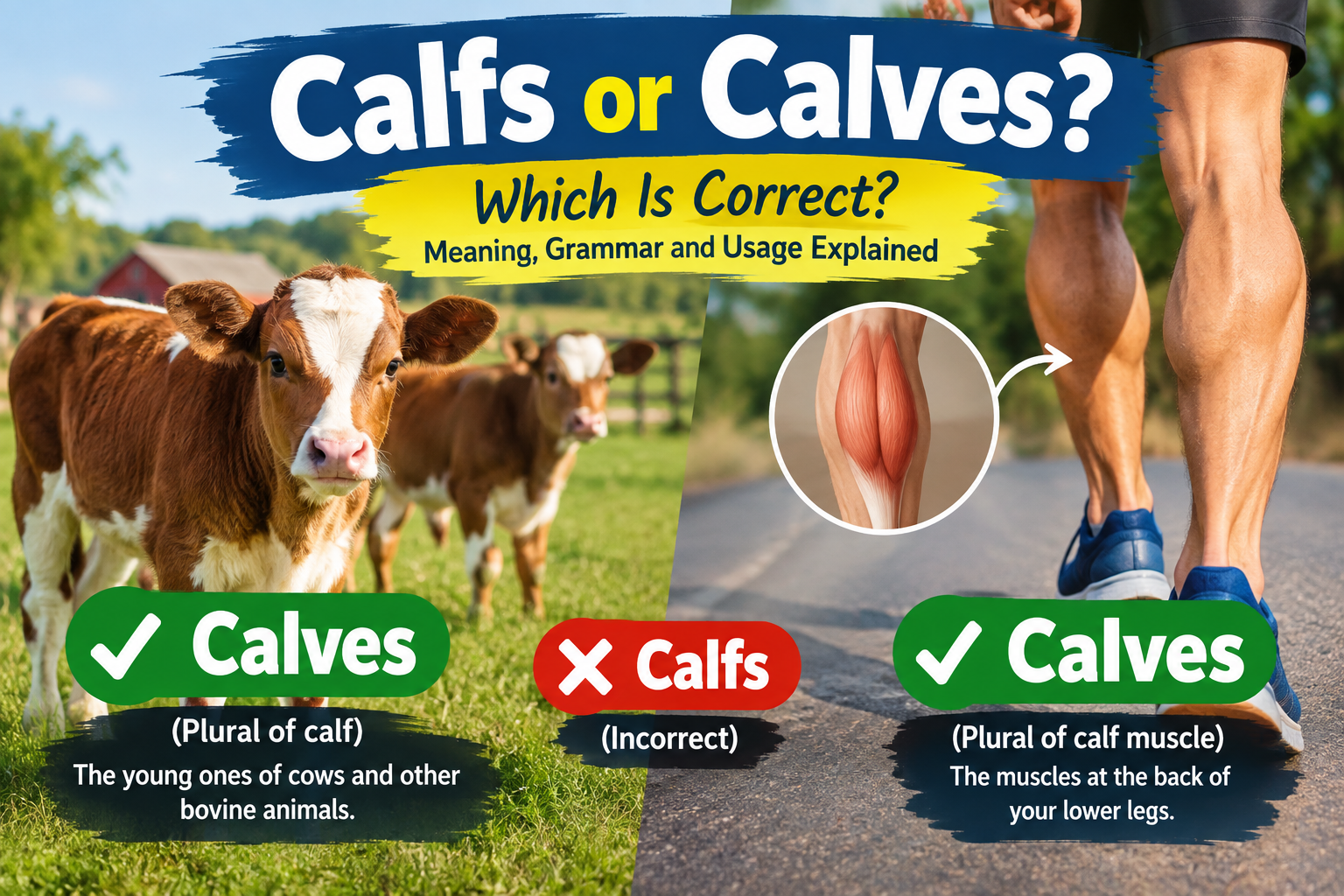
Calfs or Calves: Which Is Correct? Meaning, Grammar, and Usage Explained
Calfs or Calves: Which Is Correct? Meaning, Grammar, and Usage Explained
If you have ever wondered whether the correct plural of calf is calfs or calves, you are not alone. Many English learners, students, writers, and even native speakers occasionally get confused about this word. The English language contains many irregular plural forms, and calf is one of them. Calfs or Calves: Which Is Correct? Meaning, Grammar, and Usage Explained.
In this article, we will explain the difference between calfs and calves, discuss the grammatical rules behind the word, provide examples, and help you use the correct form confidently in your writing. Calfs or Calves: Which Is Correct? Meaning, Grammar, and Usage Explained.
What Is the Correct Plural: Calfs or Calves?
The correct plural form of calf is calves.
✅ Correct: calves
❌ Incorrect: calfs
For example:
- The farmer has several calves in the barn.
- The young calves followed their mothers across the field.
- The veterinarian examined the newborn calves.
The word calfs is generally considered incorrect in standard English and should be avoided in formal writing, academic work, and professional communication. Calfs or Calves: Which Is Correct? Meaning, Grammar, and Usage Explained
What Does “Calf” Mean?
The word calf has two common meanings:
1. A Young Cow or Young Bovine Animal
A calf is the young offspring of a cow, bull, buffalo, bison, or other related animals.
Examples:
- The calf stayed close to its mother.
- Farmers often monitor newborn calves carefully.
- Healthy calves are important for livestock production.
2. The Back Part of the Lower Leg
In human anatomy, the calf refers to the muscular area at the back of the lower leg.
Examples:
- Running strengthens your calf muscles.
- He felt pain in his calf after exercising.
- Stretching helps prevent calf injuries.
In both meanings, the plural form is calves.
Why Is It “Calves” Instead of “Calfs”?
English contains several nouns that change f or fe into ves when forming the plural.
Examples include:
| Singular | Plural |
|---|---|
| Calf | Calves |
| Leaf | Leaves |
| Wolf | Wolves |
| Shelf | Shelves |
| Knife | Knives |
| Life | Lives |
This is an irregular pluralization pattern that developed through the historical evolution of the English language.
Therefore:
- calf → calves
- not calf → calfs
Examples of Calves in Sentences
Here are some examples showing the correct usage of calves.
Animal Examples
- The farmer fed the calves early in the morning.
- Several calves were born during the spring season.
- The calves played together in the pasture.
- Healthy calves often gain weight quickly.
Anatomy Examples
- The athlete stretched his calves before the race.
- Strong calves help improve running performance.
- She felt soreness in her calves after hiking.
- Regular exercise can strengthen the calves.
Common Mistakes People Make
Many learners naturally assume that adding s creates a plural noun.
For most English words, this works:
- cat → cats
- dog → dogs
- book → books
However, some words are irregular.
A common mistake is writing:
❌ Three calfs were standing near the fence.
Correct version:
✅ Three calves were standing near the fence.
Another example:
❌ My calfs hurt after running.
Correct version:
✅ My calves hurt after running.
Calves in Agriculture and Farming
The term calves is widely used in agriculture and livestock management.
Farmers focus heavily on calf health because early development influences future productivity.
Important aspects of calf care include:
- Proper nutrition
- Clean water
- Vaccination programs
- Safe housing
- Disease prevention
Healthy calves often grow into productive adult cattle, making calf management an important part of modern farming.
Calves in Fitness and Sports
The word calves is also frequently used in fitness, sports, and health discussions.
The calf muscles play an important role in:
- Walking
- Running
- Jumping
- Climbing stairs
- Athletic performance
Popular calf exercises include:
- Standing calf raises
- Seated calf raises
- Jump rope training
- Hill running
- Stair workouts
Strong calves contribute to better balance, stability, and lower-body power.
Easy Rule to Remember
A simple way to remember the correct plural is:
If the singular is calf, the plural is always calves.
Think of similar words:
- leaf → leaves
- wolf → wolves
- knife → knives
- calf → calves
This pattern will help you avoid the common mistake of writing calfs.
Frequently Asked Questions
Is “calfs” ever correct?
In standard modern English, calfs is generally considered incorrect. The accepted plural form is calves.
What is the plural of calf muscle?
The plural is calves.
Example:
- The athlete has strong calves.
What is the plural of a baby cow?
The plural is calves.
Example:
- The calves stayed close to their mothers.
Why do some words change “f” to “ves”?
This comes from historical English pronunciation and spelling patterns that developed over many centuries.
Conclusion
When choosing between calfs and calves, the correct answer is simple: calves is the proper plural form of calf. Whether you are talking about young cattle on a farm or the muscles in the back of your legs, the plural should always be calves. Calfs or Calves: Which Is Correct? Meaning, Grammar, and Usage Explained
Understanding this rule can improve your grammar, writing accuracy, and overall confidence in English. The next time you see the question “calfs or calves,” you will know that calves is the correct and accepted form in modern English. Calfs or Calves: Which Is Correct? Meaning, Grammar, and Usage Explained
Key Takeaway:
✅ Calf → Calves
❌ Calf → Calfs