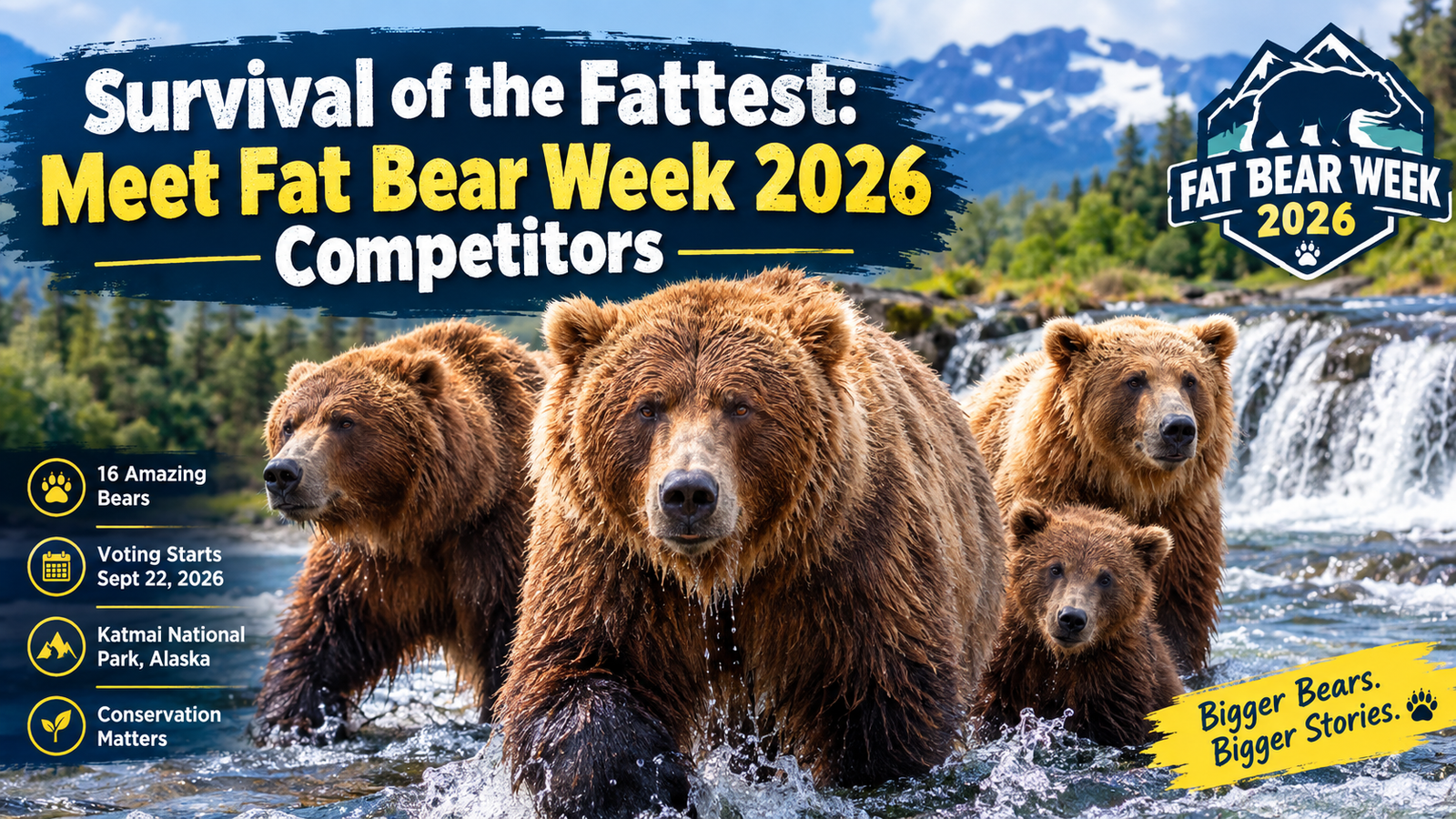
Survival of the Fattest: Meet Fat Bear Week 2026 Competitors
Survival of the Fattest: Meet Fat Bear Week 2026 Competitors
Introduction
Fat Bear Week 2026 is bringing global attention to the brown bears of Alaska’s Katmai National Park and Preserve. This annual wildlife competition celebrates bears as they build essential fat reserves before the winter season. With returning champions, new competitors, and fascinating bear families, the event offers nature enthusiasts an opportunity to learn about the animals and the ecosystem they depend on.
Fat Bear Week has become one of the most popular wildlife events online, combining public voting with educational information about brown bears, salmon runs, and conservation. The 2026 competition is expected to attract viewers from around the world who want to discover which bear will claim the year’s title.
The competition is not only about appearance or body size. It also highlights the importance of seasonal feeding, natural survival, and the relationship between wildlife and their habitat.
What Is Fat Bear Week 2026?
Fat Bear Week is an annual public voting competition featuring brown bears living in and around Katmai National Park in Alaska. The event is organized through collaboration involving the National Park Service, Explore.org, and the Katmai Conservancy.
The competition uses a bracket-style format in which bears compete in voting matchups. The winner of each matchup advances to the next round until the final champion is selected.
Fat Bear Week 2026 is scheduled to begin on September 22 and continue through September 29. During this period, fans can learn about individual bears, view photographs, and follow the competition through online platforms.
The event has gained international popularity because it combines wildlife education with an entertaining voting format. It also encourages people to learn about the natural environment in which these bears live.
Why Do Brown Bears Need to Get Fat?
Brown bears spend much of the year feeding and preparing for winter. During the summer and fall, they take advantage of food sources such as salmon, which provide the calories needed to build energy reserves.
When winter arrives, bears enter dens and experience a period of greatly reduced activity. The fat reserves developed during the feeding season help support their bodies during this time.
Female bears also need sufficient energy reserves for reproduction and cub development. This makes seasonal feeding an important part of the life cycle of brown bears.
Fat Bear Week uses this natural process as a way to explain the importance of food availability, wildlife habitats, and seasonal survival.
Meet the Fat Bear Week 2026 Competitors
The 2026 competition features 16 brown bears, including familiar names and bears from different generations. The official competition bracket should be consulted for the complete list of competitors and their individual matchups.
Bear 32 – Chunk
Bear 32, known as Chunk, is the defending champion of Fat Bear Week. He won the 2025 competition after finishing as runner-up during the previous two years.
Chunk attracted attention in 2025 after reportedly suffering a broken jaw in June, likely during a confrontation with another bear. His eventual victory made his story one of the notable moments of the previous competition.
As the returning champion, Chunk is once again a familiar name among wildlife fans. His participation adds historical interest to the 2026 tournament, although the winner will be determined by public voting.
Bear 128 – Grazer
Bear 128, known as Grazer, is another well-known competitor in Fat Bear Week history. She won the competition in both 2023 and 2024.
Grazer became the first mother bear to win Fat Bear Week, making her an important part of the event’s history. Her story shows that the competition also highlights behavior, parenting, and the challenges faced by bears in the wild.
Grazer’s reported offspring, Bear 903, known as Gully, is also mentioned in coverage of the 2026 event. Their connection adds an interesting family element to this year’s competition.
Bear 903 – Gully
Bear 903, known as Gully, is among the bears identified in reporting about Fat Bear Week 2026.
The bear’s name is associated with behavior involving gulls, which he reportedly chases to catch as food. Individual behaviors like these help viewers recognize the different personalities and feeding strategies of Katmai’s bears.
Gully represents a younger generation of bears and demonstrates how wildlife audiences can learn about individual animals through the competition.
Bear 164 – Bucky
Bear 164, known as Bucky, is another returning competitor highlighted in coverage of the 2026 event.
Naturalist Mike Fitz has described Bucky as showing increasing dominance along the river over recent years. The bear’s story is connected to the feeding opportunities and social dynamics that develop around Brooks River.
Bears compete for access to food, particularly during the salmon season. Observing their behavior provides valuable insight into how brown bears interact with their environment.
Mothers and Their Cubs
One of the notable features of Fat Bear Week 2026 is the inclusion of five mothers with cubs.
Unlike a separate junior competition, young cubs are included with their family groups in the main bracket, according to current reporting. This gives viewers an opportunity to learn more about family relationships and the development of young bears.
Mother bears play an important role in raising and protecting their cubs. Their participation highlights that Fat Bear Week is about more than adult body size; it also offers insight into the different stages of a bear’s life.
Editorial note: Verify the official 16-bear lineup and all matchup details before publishing a complete competitor list.
How Does Fat Bear Week Voting Work?
Fat Bear Week uses a single-elimination voting format. Bears are placed into matchups, and the bear receiving the most votes advances to the next round.
The voting system allows fans to participate in the competition while learning more about the featured animals. Each bear has its own characteristics, history, and seasonal development.
As the tournament progresses, the number of competitors decreases until the final winner is selected.
The public voting format has helped Fat Bear Week attract audiences from many countries. It offers an accessible way for people to engage with wildlife without needing to visit Alaska in person.
When Does Fat Bear Week 2026 Start?
Fat Bear Week 2026 is scheduled to begin on September 22, 2026, and run through September 29, 2026.
Fans should check the official Fat Bear Week website for the latest voting instructions, bracket updates, and competition announcements.
Where Can You Watch the Bears?
People can watch Katmai’s brown bears through live cameras available on Explore.org. These cameras provide views of areas such as Brooks Falls, where bears gather during the salmon run.
Live streams allow viewers to observe natural bear behavior, feeding habits, and interactions in the wild.
Watching the bears through live cameras also supports wildlife education by giving audiences a closer look at the animals and their habitat.
Why Are Salmon Important to Brown Bears?
Salmon are a major food source for the brown bears of Katmai National Park. During the annual salmon run, bears take advantage of the available fish to build the energy reserves they need for winter.
The salmon season is an important part of the ecosystem. It provides food not only for bears but also contributes to the wider natural food chain.
Bears must make use of seasonal feeding opportunities while food is available. Their ability to gain weight and maintain healthy reserves is connected to the availability of food in their environment.
Fat Bear Week helps audiences understand how salmon runs and natural habitats support the survival of brown bears.
The Connection Between Feeding and Winter Survival
During winter, brown bears enter dens and reduce their activity. Their bodies rely on energy reserves built during the feeding season.
A successful feeding period can support the health of individual bears and contribute to reproductive success. This is particularly important for female bears raising cubs.
The seasonal cycle demonstrates why protecting wildlife habitats and maintaining healthy ecosystems are important for brown bear populations.
The History of Fat Bear Week
Fat Bear Week began in 2014 as a smaller event known as Fat Bear Tuesday. The idea developed from observations of how dramatically bears change in appearance between the beginning and end of the feeding season.
According to the National Park Service, ranger Mike Fitz helped inspire the event after seeing a fan post comparing photographs of a bear at different times of the year.
The comparison showed how much the bears’ bodies change as they prepare for winter. The event eventually expanded into a week-long competition that attracted a growing international audience.
Today, Fat Bear Week is recognized as a major online wildlife event, combining public participation with educational content.
How the Competition Became Popular
Fat Bear Week has grown from a small online celebration into a globally followed event. Millions of votes have been cast in previous competitions, with participants joining from countries around the world.
Its popularity is connected to the appeal of live wildlife cameras, individual bear stories, and the simple voting format.
The event also gives conservation organizations an opportunity to share information about brown bears and the ecosystems they depend on.
Conservation and Wildlife Education
Fat Bear Week is associated with the National Park Service, Explore.org, and the Katmai Conservancy. The event provides an opportunity to raise awareness about brown bear conservation and the importance of protecting natural habitats.
Although the competition is designed to be entertaining, it also introduces audiences to topics such as food availability, bear behavior, habitat protection, and seasonal survival.
The event has also highlighted fundraising initiatives, including the Otis Fund, which honors Bear 480, a four-time Fat Bear Week champion.
Why Healthy Habitats Matter
Brown bears require access to suitable habitats and sufficient food throughout the year. Salmon availability is one of the important environmental factors that influence their feeding season.
Protecting rivers, forests, and wildlife habitats helps maintain the natural conditions that support bear populations.
By encouraging people to learn about Katmai’s ecosystem, Fat Bear Week connects entertainment with broader wildlife awareness.
What Makes Fat Bear Week 2026 Interesting?
Several aspects of the 2026 competition have attracted attention.
Returning Champion Chunk
Chunk returns after winning the 2025 competition. His previous tournament history makes him a familiar figure for Fat Bear Week followers.
Grazer’s Continued Legacy
Grazer remains an important bear in the event’s history after winning in 2023 and 2024. Her story highlights the role of mother bears and family groups.
Families and Young Cubs
The participation of mothers with cubs gives viewers the chance to learn more about bear families and the development of young animals.
International Participation
People around the world can follow the competition online, watch live cameras, and participate in public voting.
These elements make Fat Bear Week an opportunity to learn about brown bears while following an entertaining annual event.
Frequently Asked Questions
When is Fat Bear Week 2026?
Fat Bear Week 2026 is scheduled for September 22 through September 29, 2026.
Who won Fat Bear Week 2025?
Bear 32, known as Chunk, won the 2025 Fat Bear Week competition.
How many bears are competing in 2026?
The 2026 competition features 16 bears.
Can people vote online?
Yes. Public voting is available through the official Fat Bear Week website during the competition.
Where is Fat Bear Week held?
The competition features brown bears from Katmai National Park and Preserve in Alaska, particularly around the Brooks River area.
Why do bears get fat before winter?
Bears build fat reserves during the feeding season to support their bodies during winter, when they enter dens and reduce their activity.
Is there a junior competition in 2026?
Current reporting indicates that there is no separate Fat Bear Week Junior competition in 2026. Young cubs are included with family groups in the main competition.
Where can I watch the bears live?
Explore.org provides live bear cameras, including views of Brooks Falls, where bears feed during the salmon season.
Conclusion
Fat Bear Week 2026 brings together wildlife enthusiasts and nature lovers from around the world to celebrate the brown bears of Katmai National Park.
With defending champion Chunk returning, Grazer continuing her legacy, and family groups featuring mothers and cubs, the event offers a range of fascinating bear stories.
Beyond the voting competition, Fat Bear Week highlights the importance of salmon, seasonal feeding, healthy habitats, and winter survival. It helps audiences understand the natural processes that allow brown bears to thrive in Alaska.
As the competition begins on September 22, fans can follow the official bracket, watch live bear cameras, and discover more about the individual animals featured in the event.
Fat Bear Week demonstrates how wildlife education can be engaging and accessible, encouraging people to learn more about conservation and the importance of protecting natural ecosystems.