2 Killed in Yosemite Wildfire Helicopter Crash During ‘Bucket Drops’
2 Killed in Yosemite Wildfire Helicopter Crash During ‘Bucket Drops’
YOSEMITE NATIONAL PARK, Calif. — Two people were killed after a firefighting helicopter crashed Sunday afternoon while supporting efforts to contain the growing Dome Fire inside Yosemite National Park, federal officials and the aircraft operator confirmed.
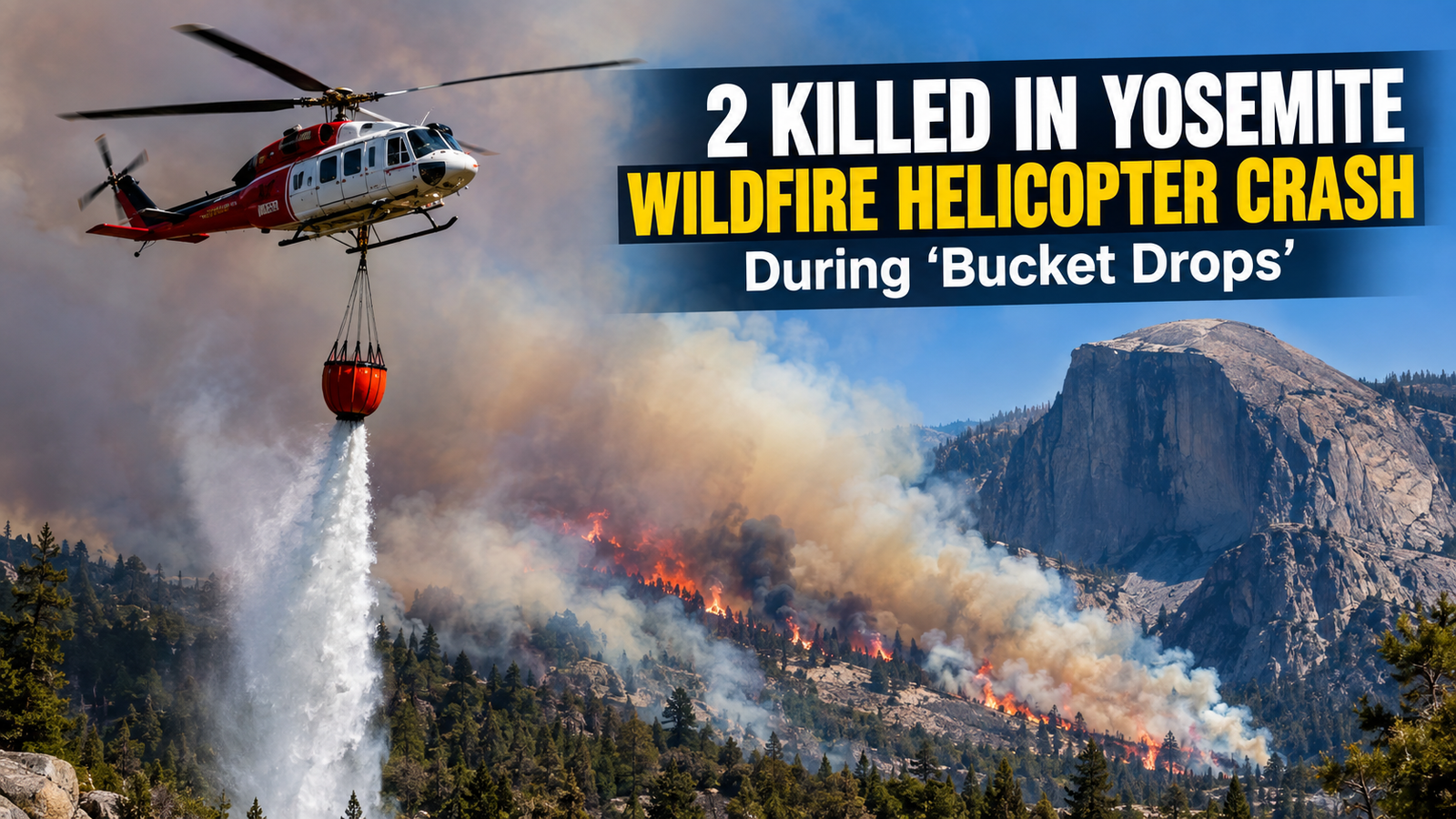
The helicopter was conducting wildfire suppression operations and was reportedly carrying out water bucket drops when it went down in rugged terrain southeast of Ostrander Lake. The Federal Aviation Administration said the aircraft crashed under circumstances that remain unknown, while the National Transportation Safety Board is leading the investigation with assistance from the FAA.
The crash adds a tragic dimension to an already difficult firefighting operation in Yosemite. The Dome Fire, which began on September 15, has spread across more than 3,000 acres and remained about 15% contained in the latest reports available Monday. Hundreds of firefighters and numerous aircraft have been working to slow the fire in steep and remote terrain.
The two people aboard the helicopter were the only occupants, according to officials. Their identities had not been publicly released as of September 21 while authorities worked to notify their families. The aviation company Precision, which operates the aircraft, confirmed that two members of its team were lost in the crash.
Table of Contents
- Yosemite Wildfire Helicopter Crash: What Happened?
- Two People Killed in the Crash
- Helicopter Was Conducting Water Bucket Drops
- What Is the Dome Fire?
- Firefighting Conditions in Yosemite
- Why Helicopters Are Important During Wildfires
- FAA and NTSB Investigation
- Recovery Efforts at the Crash Site
- Current Dome Fire Situation
- Yosemite Park Closures and Safety
- Broader Impact on Wildfire Crews
- What Happens Next?
- Final Takeaways
Yosemite Wildfire Helicopter Crash: What Happened?
The fatal crash happened Sunday afternoon, September 20, as crews continued their response to the Dome Fire in Yosemite National Park.
According to the FAA, a Eurocopter AS332-type aircraft crashed shortly before 3 p.m. during firefighting operations in the Mariposa County area. The agency described the circumstances surrounding the crash as unknown and said the aircraft was involved in water bucket drops at the time.
The helicopter was operating in an area southeast of Ostrander Lake, a remote location within Yosemite. The crash site is roughly nine miles south of the park’s iconic El Capitan and about seven miles northeast of Wawona, according to information provided by officials.
Officials have not announced what caused the helicopter to crash.
That distinction is important because the investigation is still in its early stages. Investigators will need to examine the aircraft, flight path, weather conditions, operational circumstances, maintenance records and other evidence before determining what happened.
At this point, authorities have not publicly identified a mechanical failure, pilot error, weather problem or another specific cause.
Two People Killed in the Crash
Two people were aboard the helicopter when it crashed, and both died.
The aircraft operator, Precision, confirmed the deaths of two members of its team. The company expressed grief and asked for privacy and compassion for the families and colleagues of those who died.
The names of the victims had not been released publicly as of September 21. Officials said notification of next of kin was still being handled.
Reports have described the two occupants as members of the helicopter crew. Some reports identified them as pilots, while FAA information cited by local news outlets described one pilot and one passenger aboard the aircraft.
Because the official investigation is still developing, additional information about their roles and the circumstances of the flight may be released later.
The loss is especially significant for the wildfire community, where aviation crews routinely work in difficult conditions to support firefighters on the ground.
Helicopter Was Conducting Water Bucket Drops
The helicopter was involved in one of the most important aerial firefighting tasks: delivering water to the fire.
Firefighting helicopters can carry large buckets beneath the aircraft and repeatedly travel between a water source and the active fire area. The bucket is filled with water and then released over targeted portions of the fire.
This approach allows crews to attack fire from the air, particularly in locations where ground crews may have difficulty reaching the flames because of steep slopes, dense vegetation, rocks or other obstacles.
According to the FAA, the Yosemite helicopter crashed while conducting water bucket drops. The agency has not yet released details explaining what occurred during the operation.
Water-dropping missions require careful coordination between pilots, incident commanders, ground crews and other aircraft. Pilots must operate close to mountainous terrain and fire activity while managing aircraft weight, visibility, wind and other operational factors.
The crash investigation will determine which circumstances contributed to the incident.
What Is the Dome Fire?
The helicopter crash occurred while crews were fighting the Dome Fire, a wildfire that began in Yosemite National Park on September 15.
NASA reported that the fire was first discovered about a quarter-mile north of Chilnualna Falls. Within hours, the fire had expanded significantly across dry backcountry terrain. By September 17, it had burned more than 1,100 acres.
The fire continued growing over the following days.
A National Park Service update from September 20 reported that the Dome Fire had reached approximately 2,667 acres and was 15% contained, with 525 personnel assigned to the incident. The fire had expanded toward the footprint of the 2017 Empire Fire.
Later reports on September 21 put the fire at more than 3,000 acres while maintaining approximately 15% containment.
The fire is burning in rugged terrain, creating challenges for firefighters attempting to construct direct hand lines and contain the perimeter.
Firefighting Conditions in Yosemite
Firefighters responding to the Dome Fire have been dealing with steep terrain and heavy fuels.
The National Park Service said crews were using natural features such as granite outcroppings and previously burned areas as barriers while working to suppress the fire. Some sections of the fire were moving through red fir fuel types that can support spotting and active fire spread.
The terrain makes traditional ground-based firefighting more complicated.
Crews may have to hike long distances into remote areas while carrying equipment and supplies. Helicopters therefore provide an important way to move firefighters, equipment and supplies while also conducting aerial suppression operations.
Before the crash, nine helicopters were supporting the Dome Fire response, according to Yosemite National Park. Aircraft were being used for water drops, crew transportation and logistical support.
The loss of one firefighting helicopter and two aviation personnel is therefore significant for the ongoing response.
Why Helicopters Are Important During Wildfires
Helicopters play several roles in modern wildfire response.
One of their most visible jobs is aerial water delivery. Aircraft can repeatedly collect water and drop it on active fire lines, hot spots and areas where flames are spreading.
Helicopters are also used to transport firefighters into remote areas.
Yosemite’s Dome Fire has been burning in terrain where roads and trails do not provide easy access to every section of the fire. The National Park Service previously reported that helicopters were being used to insert highly trained hotshot crews and provide them with supplies and equipment.
Specialized aviation teams can also support helitack and helirappel operations. These crews are trained to reach difficult wildfire locations using helicopters and, where appropriate, ropes or other specialized deployment systems.
The helicopter involved in Sunday’s crash was working alongside a specialized wildfire aviation operation, according to reports.
The incident demonstrates the risks faced not only by firefighters on the ground but also by pilots and aviation crews working above active fires.
FAA and NTSB Investigation
The cause of the Yosemite helicopter crash remains under investigation.
The National Transportation Safety Board is expected to lead the investigation, with the Federal Aviation Administration assisting.
Investigators generally examine multiple categories of evidence following a fatal aviation accident.
These can include:
- Aircraft maintenance history
- Flight records
- Pilot qualifications and experience
- Weather conditions
- Aircraft performance
- Flight path information
- Communications
- Witness accounts
- Video or tracking data
- Physical evidence from the crash site
Investigators may also examine the helicopter’s firefighting equipment and the operational conditions surrounding the water drop.
At this stage, there is no confirmed public explanation for why the aircraft went down.
That means claims about the exact cause should be treated cautiously until investigators release verified findings.
Recovery Efforts at the Crash Site
The remote location of the crash has created additional challenges for recovery crews.
The helicopter went down southeast of Ostrander Lake in rugged Yosemite terrain. Active wildfire conditions can make access difficult and may require specialized personnel and equipment.
The crash site is also within an area affected by the ongoing Dome Fire response.
According to reports, recovery operations were continuing as officials worked to handle the scene and notify the victims’ families.
The remote nature of many Yosemite locations means that emergency response can involve significant logistical challenges compared with an aviation accident occurring near a major airport or populated area.
Current Dome Fire Situation
As of the latest reports available on September 21, the Dome Fire had burned more than 3,000 acres and was approximately 15% contained.
Containment does not mean that a fire is extinguished. Instead, it generally refers to the percentage of the fire perimeter where crews have established a control line or otherwise limited the fire’s ability to spread.
The National Park Service has been coordinating ground and aerial resources as crews work to suppress the fire.
Earlier updates reported concerns around several portions of the fire, including spot fires and hot spots. Firefighters have been constructing and strengthening hand lines while taking advantage of natural barriers and areas previously affected by wildfire.
Weather conditions can also affect fire behavior.
Changes in temperature, wind, humidity and cloud cover can influence how quickly vegetation dries and how flames spread. Fire managers therefore continually reassess conditions as they develop.
Yosemite Park Closures and Safety
Although the Dome Fire is a serious incident, Yosemite National Park has continued operating with specific restrictions and closures related to the wildfire.
The National Park Service has issued safety restrictions for areas affected by the Dome Fire. The agency has warned of hazards including falling limbs, standing dead trees and fire-damaged trees.
The Chilnualna Falls trail and several trails extending from the top of Chilnualna Falls toward Buena Vista and Crescent Lakes have been closed because of the fire.
Earlier park updates indicated that Yosemite remained open and operating normally apart from fire-related restrictions.
Visitors should check current National Park Service information before traveling to affected areas because wildfire conditions and closures can change quickly.
Broader Impact on Wildfire Crews
The deaths in Yosemite come during a difficult year for wildfire responders across the United States.
The Associated Press reported that at least 14 people had died while helping fight wildfires in the U.S. during 2026, making it the deadliest year for wildfire responders since 2022 based on government reports.
Other fatal aviation incidents have also occurred during wildfire operations this year, including helicopter crashes in other states.
Wildfire aviation is inherently complex because pilots may operate close to steep terrain, smoke, flames and changing weather conditions.
At the same time, aviation resources are an important component of wildfire suppression, particularly when fires spread into areas that are difficult or dangerous for ground crews to reach.
The deaths of the two Yosemite aviation workers have therefore drawn attention across the firefighting community.
What Happens Next?
The investigation into the crash is expected to continue for some time.
The NTSB and FAA will work to establish what happened before the helicopter went down and why the aircraft was unable to complete its firefighting mission.
Officials may eventually release additional information about the helicopter, its crew, the flight and the environmental conditions at the time of the crash.
The investigation could also examine whether any operational or mechanical factors contributed to the accident.
For now, authorities have not publicly identified a cause.
Meanwhile, firefighting operations on the Dome Fire are continuing. Ground crews and aircraft remain focused on containing the wildfire and protecting people, infrastructure and other resources in the affected region.
The crash is likely to have an impact on the availability and coordination of aviation resources assigned to the incident, although officials will determine how to adjust the firefighting operation as needed.
A Difficult Mission Made More Dangerous
The Yosemite helicopter crash highlights the risks involved in fighting wildfires from the air.
Firefighting pilots operate in an environment very different from normal commercial aviation. Their missions can require repeated low-level flights, close coordination with ground teams and operation in areas affected by smoke, heat, turbulence and rugged terrain.
Water bucket operations add another layer of complexity because aircraft must carry and release heavy loads while maintaining precise control.
Yet these missions remain an important part of wildfire suppression, especially in mountainous areas where firefighters cannot easily reach every active section of a fire.
The Dome Fire has required a substantial response because of its location, terrain and growth.
The National Park Service had already deployed numerous helicopters and hundreds of personnel before Sunday’s fatal accident.
The loss of two aviation professionals is therefore not simply an aviation accident occurring near a wildfire. It directly affects a firefighting operation in which aircraft are being used as a key resource.
What We Know and What Remains Unknown
Several facts have been confirmed.
Two people died in the helicopter crash.
The crash happened during wildfire firefighting operations connected to the Dome Fire.
The aircraft was conducting water bucket drops.
The helicopter went down near Ostrander Lake in Yosemite.
The FAA and NTSB are investigating.
The aircraft operator Precision confirmed the loss of two team members.
The identities of the victims had not been released as of September 21 pending notification of their families.
However, important questions remain unanswered.
Investigators have not yet determined the cause of the crash. There has been no official finding that a mechanical failure, weather condition, pilot action or firefighting equipment caused the accident.
Those conclusions will require investigation and evidence.
Final Takeaways
The fatal Yosemite wildfire helicopter crash occurred as crews were working to contain the Dome Fire, which has grown to more than 3,000 acres in Yosemite National Park.
Two people aboard the firefighting helicopter were killed during operations on September 20. The aircraft was conducting water bucket drops when it crashed in rugged terrain southeast of Ostrander Lake.
The victims’ names had not been publicly released as of September 21 while authorities worked to notify their families.
The FAA and National Transportation Safety Board are investigating the accident, and officials have not yet announced a cause.
The Dome Fire continues to require a major firefighting response, with hundreds of personnel and multiple aircraft involved. Firefighters are working in steep terrain and using both direct suppression tactics and natural barriers to slow the fire.
The crash serves as a reminder of the risks faced by aviation crews who support wildfire operations. While helicopters are an important tool for delivering water, transporting firefighters and reaching remote areas, those missions can involve challenging conditions.
As the investigation continues, additional information about the crash may become available. For now, the focus remains on honoring the two people who lost their lives while supporting the wildfire response and continuing efforts to contain the Dome Fire safely.
This article is based on information available as of September 21, 2026. Details may change as officials release additional findings from the investigation.